Muay Thai fight night in Khao Lak
An evening card of bouts at the town's boxing stadium, each one opened by the wai khru. Standard or ringside seats, with a beer at ringside. Under-sixes go free.
Khao Lak · Phang Nga
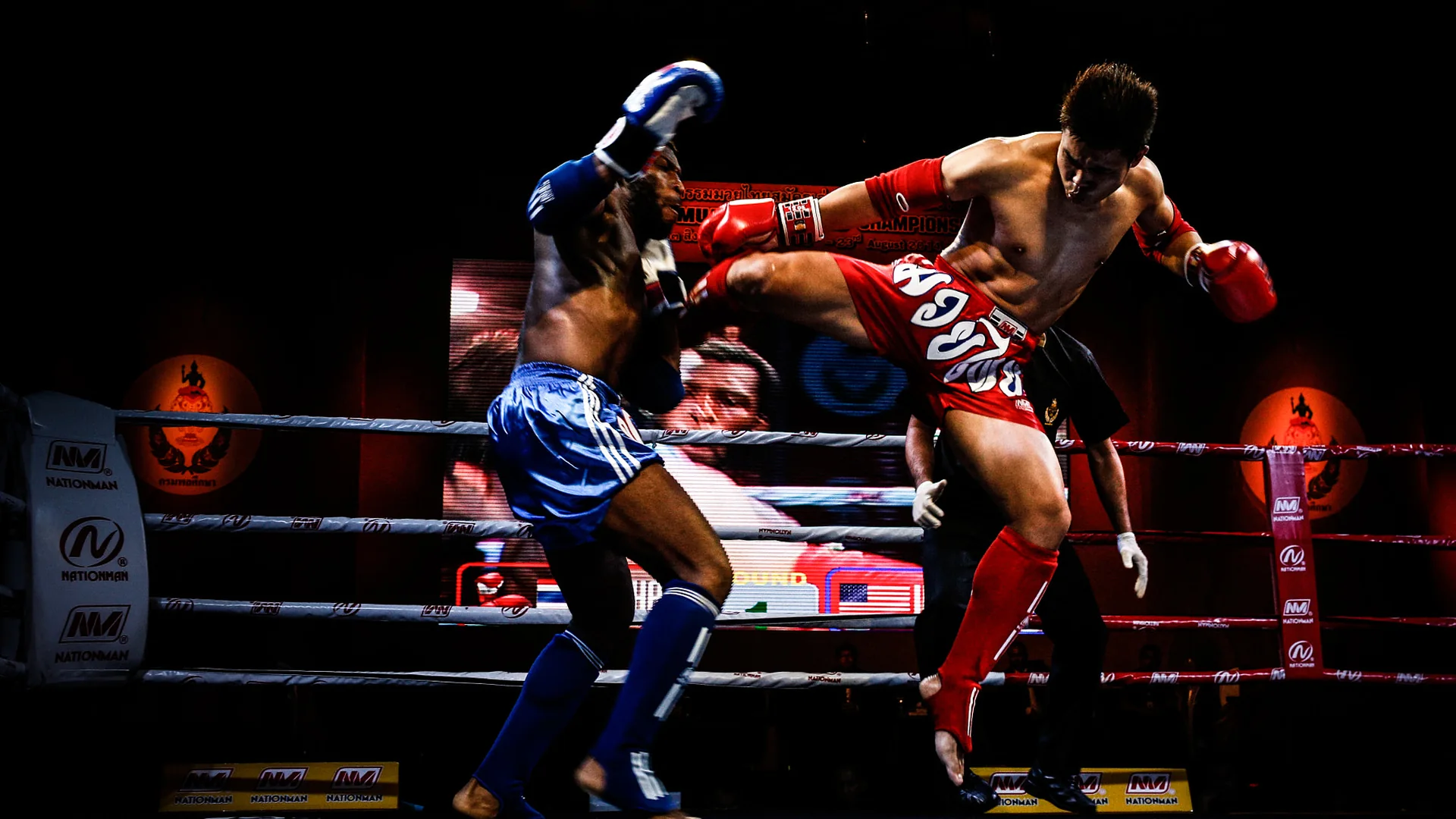
Khao Lak's boxing stadium runs an evening card of Muay Thai bouts, each opened by the wai khru ram muay.
Ringside seats come with a drink and put you an arm's length from the ropes.
Our verdict, first
For most visitors, yes: it is the way to see Thailand's own combat sport live without leaving the Khao Lak coast. The ticket gets you into an evening card of bouts at the town's stadium, with Thai and international fighters and the wai khru ritual before every fight. Book ringside to sit at the ropes with a beer included; book standard to watch the same bouts for less. Expect some fighters to be teenagers, and stay until you are ready to go home, because re-entry may be refused.
A ticketed evening of Muay Thai fought live in a stadium with a ring, corners and a referee, and fighters from Thailand and abroad. The bouts follow Muay Thai rules: punches, kicks, knees and elbows all count, and fighters may hold each other in the clinch. The hall is air-conditioned, which matters on a humid Andaman night.
Nothing here is scripted: it is not a show, a dinner or a training class, and nobody from the audience steps into the ring. Food and any drink beyond the ringside beer are paid for on the night, and the ticket includes no transport. These are full-contact fights, so cuts and knockdowns are part of what you may see.
Fight night at a glance
The weapons and the rules
No bout list is printed here, because the stadium sets its own card. These are the weapons and rules every Muay Thai fight is built on, so you can follow it from the first exchange.
Before the bell
Ritualwai khru
Each fighter circles the ring, bows at the corners and then performs a slow personal dance, the ram muay, honouring teachers, parents and ancestors. The movements often hint at the gym and the region a fighter comes from.
The eight limbs
Fistsmat
Early Muay Thai had few punches, mostly crosses and a long swinging blow; contact with Western boxing brought in jabs, hooks and uppercuts. Body punches are rarer than in other striking sports, because dropping the head invites a knee or an elbow.
The eight limbs
Elbowssok
Elbows come across, upward, downward, spinning or flying, usually when the fighters are too close for a hook. They are rated the most dangerous strike in the sport, and a clean one can open a cut or finish a bout.
The eight limbs
Kneeskhao
A knee can be driven straight in, launched in a jump off one leg, or thrown after a running step as a flying knee. Many land in the clinch, where one fighter holds the other's head and drives up into the body.
The eight limbs
Shinste
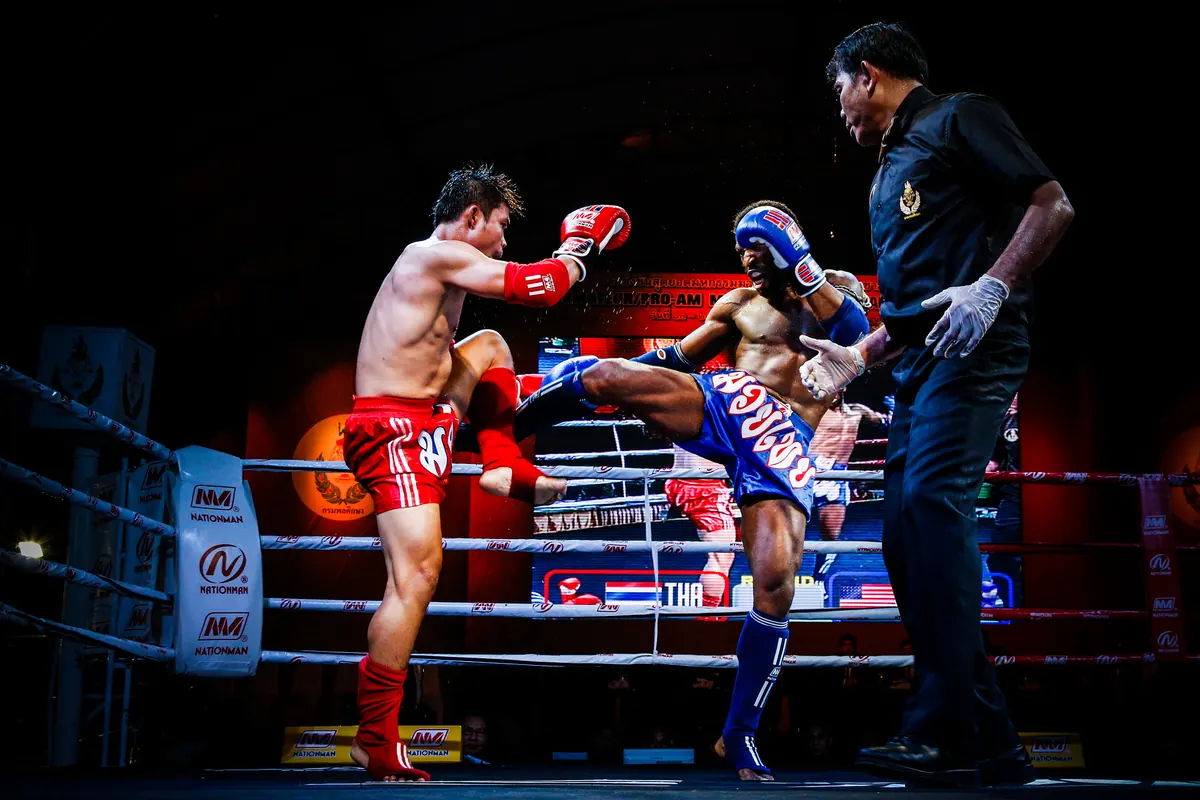
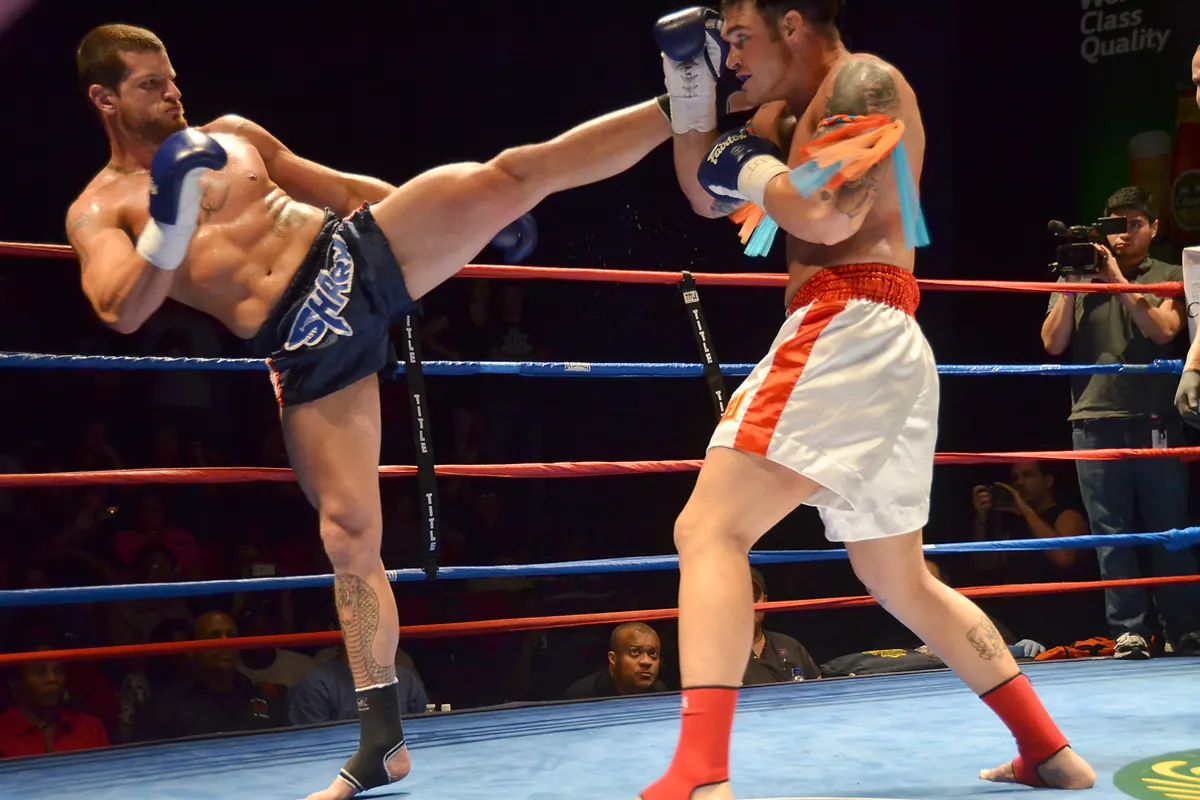
The Thai roundhouse kick turns the whole body from the hips and lands with the shin rather than the foot, whose small bones break more easily. That is why fighters spend so long hardening their shins on pads and heavy bags.
The eight limbs
Feetteep
The teep works like a jab with the leg: a quick thrust with the sole that knocks an opponent off balance or stops them walking forward. Watch for it whenever one fighter wants space.
Defence and the clinch
Check
Kicks to the legs and body are normally blocked with the raised upper shin, a block known as the check. Higher kicks are taken on the forearms and shoulder together, and a kick to the body can be caught and turned into a sweep.
Defence and the clinch
Clinchchap kho
A Western boxing referee pulls apart fighters who grab hold of each other; in Muay Thai the clinch is part of the fight. Fighters lock their hands behind the opponent's head, press forearms against the collarbones and work knees and elbows from close range.
How it is scored
Rounds
Bouts under Muay Thai rules are generally five rounds of three minutes with two minutes' rest, although some promotions run three. Kicks to the body and head score highly with the judges, and punches count for less.
Sources: Wikipedia's articles on Muay Thai, Wai khru ram muay, Sarama (Thai music) and Kickboxing. Thai terms follow the spellings used there.
From the door to the last bell
Each night's start time appears on the confirmation you receive. The steps below are the usual shape of a Muay Thai card, not a promise about who fights or in what order.
Arrive
Go straight to the stadium and show your voucher at the entrance, on your phone or printed. Plan to walk in a good half hour before the first match, which leaves time to find your seat and buy a drink.
Sit
Where you sit depends on the seat you booked. Ringside puts you at the ropes with one beer included; standard seats sit further back for less money and show the same bouts.
Salute
Fighters often enter wearing the mongkhon headband and pra jiad armbands. After each has finished the wai khru ram muay, the trainer often lifts the headband off and leaves it in the corner for luck.
Fight
The card mixes Thai fighters with fighters from abroad and can include women's bouts and title-belt fights. Traditionally the ringside music is slow and stately for the ritual, then picks up speed with the fighting.
Rest
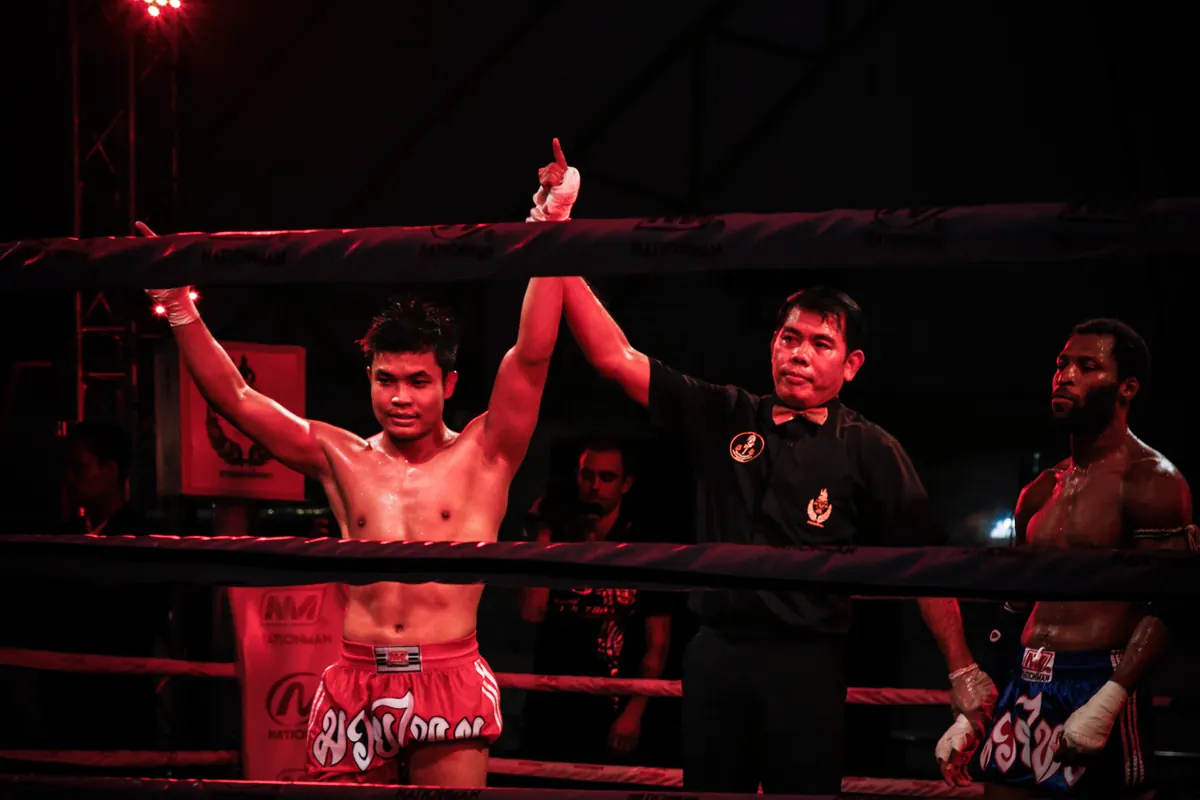
Between rounds fighters return to their corners for water and instructions. A bout that goes the distance is decided by the judges; otherwise it ends early by knockout or when the referee stops it.
Leave
Re-entry may not be allowed after you leave the building, so eat beforehand and leave when you are ready to finish. Arrange your ride home before you sit down, because the card runs late and no transport is included.
Inside the price, and outside it
Read this before you choose a seat.
Two ways to spend a Khao Lak day
Ring, ritual and coast
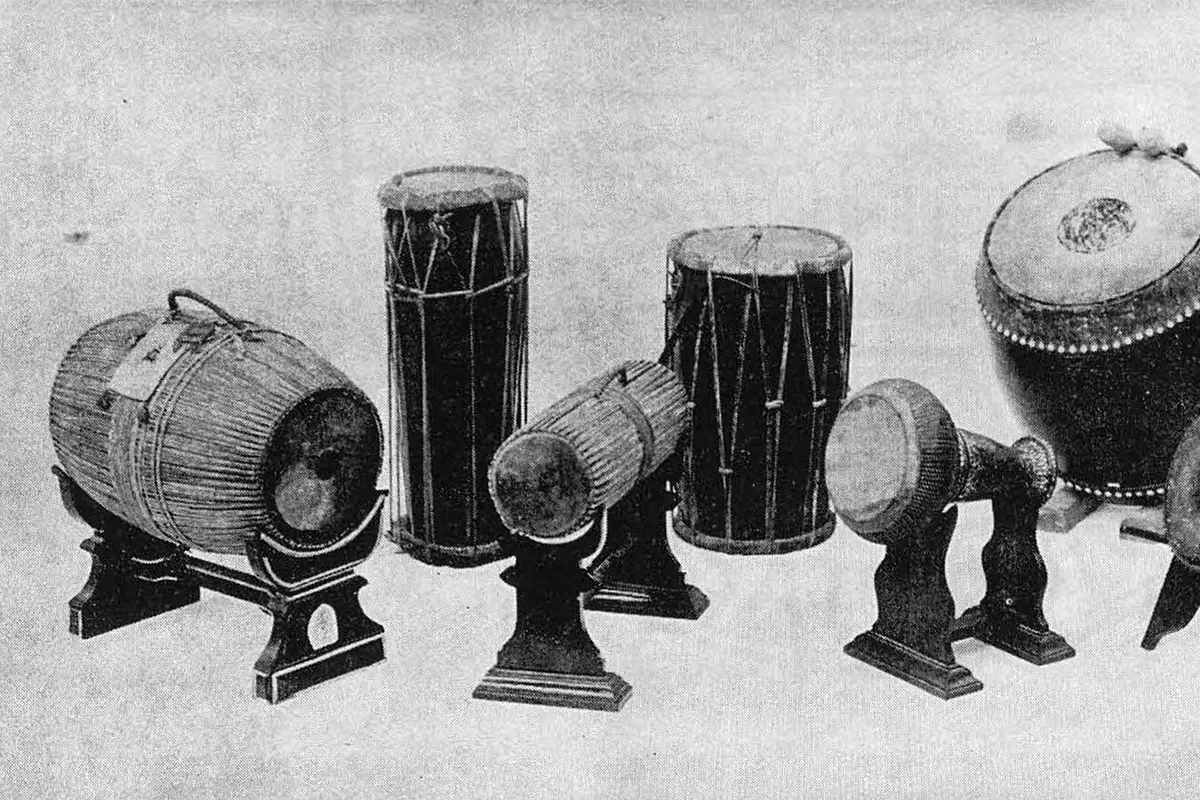
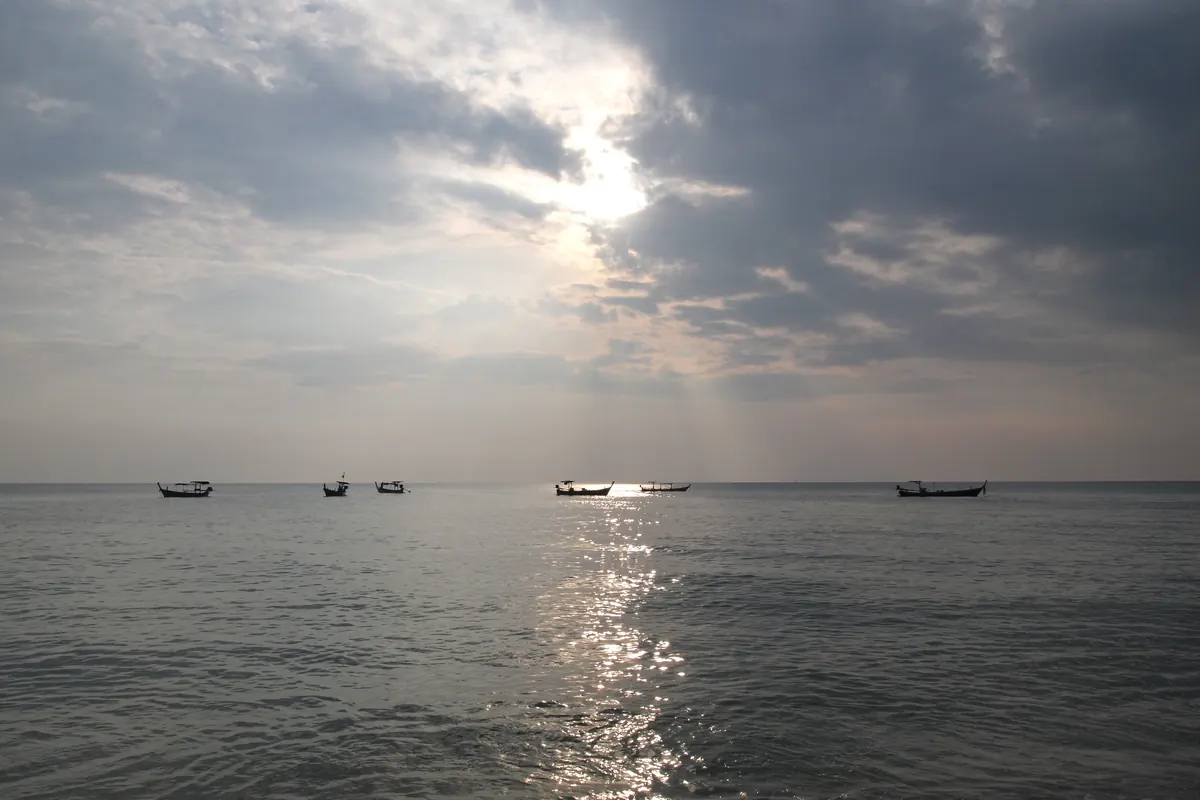
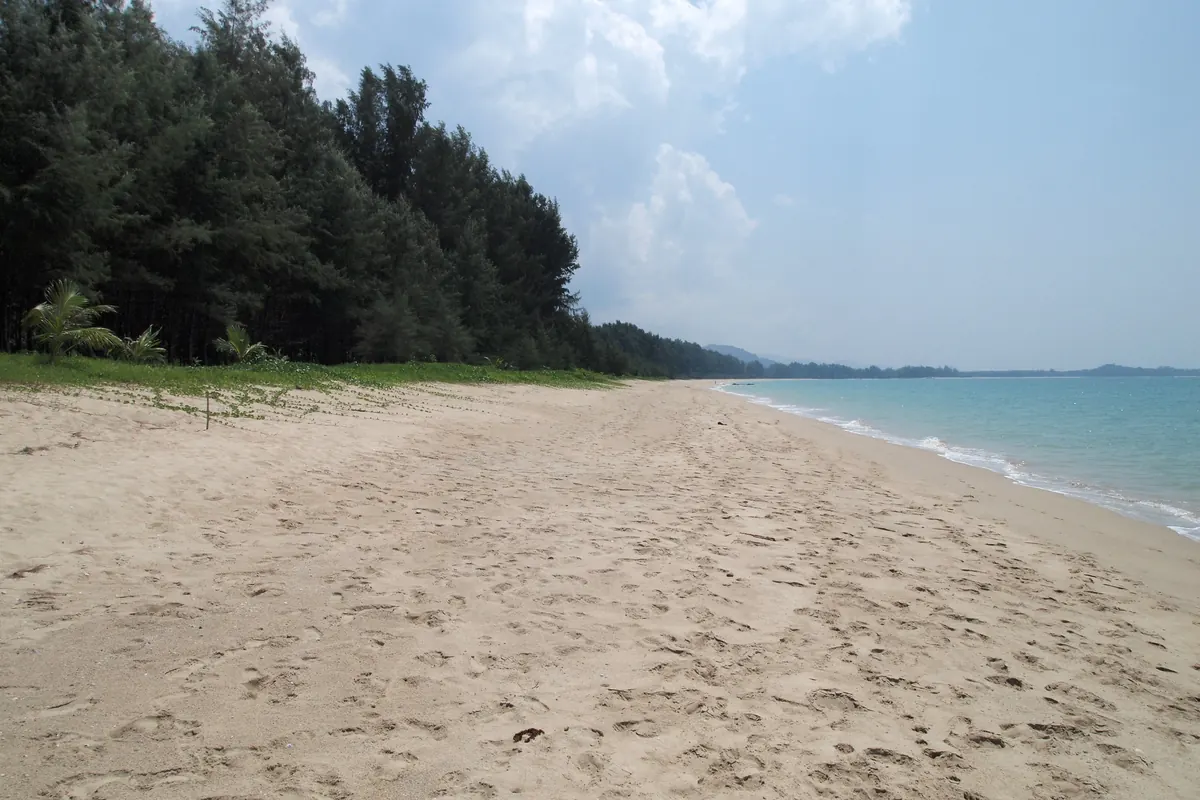
The ring, the drums behind the music, and the stretch of the Andaman coast you will be staying on.
Book the fight, then plan the days around it
The fight night fills an evening. The bay and the lake each fill a day, and the transfer gets you from Phuket airport to the coast in the first place.
An evening card of bouts at the town's boxing stadium, each one opened by the wai khru. Standard or ringside seats, with a beer at ringside. Under-sixes go free.
Eight hours from Khao Lak with an English-speaking guide: a longtail across the bay, a short canoe among the limestone rocks, lunch on Koh Panyi and a cave temple. Pickup from your Khao Lak hotel is included.
A full day inland in Khao Sok National Park: a swim in a forest creek, a boat across the lake to its limestone pillars, a cave by headlamp and a Thai lunch. Park fee and pickup included.
A private car for up to four people, about an hour and a half, with the driver tracking your flight. Priced per vehicle in the calendar.
Other bookable days near Khao Lak
Getting to the stadium
Khao Lak is the name tour operators give to a string of beach villages on the Andaman coast of Phang Nga province, about 60 kilometres north of Phuket. Most of them lie in Takua Pa district.
The simplest way there is a taxi or a car from your hotel. Ask the front desk to book it, agree the fare before you set off, and arrange the return for the end of the card.
Songthaews, pickup trucks fitted with two benches along the back, run as shared taxis in Thailand. Settle the fare before you climb in, and sort out the ride back before the card starts.
Landing on fight day? The private transfer card above runs between Phuket International Airport and Khao Lak hotels in about an hour and a half. Leave time to check in and eat before the first bout.
From November to April Khao Lak is in its dry season, and May to October brings the monsoon. Because the fights happen indoors under air-conditioning, the weather decides a bay or lake day far more than it decides fight night.
Your voucher on a charged phone, money for food and drinks, and a light layer if air-conditioning makes you cold. Leave big bags at your hotel.
Read before the bell
FAQ
Yes, if you want live Muay Thai close to your hotel. You get an evening card of bouts with Thai and international fighters, each one opened by the wai khru ritual. Ringside adds a beer and puts you at the ropes. Skip it if watching young fighters would trouble you.
Book ringside to sit at the ropes with one beer included. Book standard if you are watching the budget or bringing children, since the bouts are the same from either seat. The calendar shows both seat types with their prices before you pay.
Some may be. Junior and teenage fighters are common on Thai cards, and the Khao Lak card can put fighters well under 18 in the ring as well as adults. Wikipedia's Muay Thai article covers the numbers and the medical debate. If that would upset you, choose another evening.
Most of an evening. The card is a run of bouts with the ritual before each one, and your confirmation gives the start time. Get there a good half hour before the opening bout, and stay until you are ready to leave, because re-entry may not be allowed.
Yes. Children under six go free and there are child rates for older children. Weigh the noise, the full-contact fighting and the late finish before bringing young ones, and choose standard seats if you would rather sit back from the ring.
Only the ringside ticket includes a drink: one complimentary beer. Food and any other drinks are paid for at the stadium, so bring money for them.
No. Go directly to the stadium by taxi, car or songthaew and show your voucher at the entrance. Arrange your ride home before the card starts.
Yes, within limits. Give GetYourGuide at least 24 hours' notice and the full amount is returned, and paying can wait until nearer the night. Each ticket is good only for the date on it.
The stadium runs its card on two nights a week. The booking calendar shows the open nights and the start time; if you also have an early tour booked, pick a fight night that leaves the following morning free.
No. Khao Lak Fight Night Guide is written independently for visitors: neither the stadium nor the ticket seller runs it, and it is not affiliated with them, with the fighters or with their gyms. Bookings are made with GetYourGuide.